


Radon is a serious concern for Midwestern homeowners, but it’s one that’s not talked about often. Many new homeowners don’t even know they may be at risk. In this article we’ll answer some frequently asked questions about radon.
What Is Radon and Where Does It Come From?
Radon is an invisible gas that naturally forms in soil and rock. It’s radioactive, dangerous at high levels, and found in homes across Iowa and Nebraska.
Radon forms when uranium in the soil breaks down. It seeps into homes through cracks, gaps, or porous building materials like concrete. Since it’s colorless, odorless, and tasteless, you won’t notice it’s there unless you test for it.
Why Are Radon Levels So High In Iowa and Nebraska?
Iowa and Nebraska are at high risk for radon gas in homes. The entire state of Iowa and parts of Nebraska are in the red zone, meaning they have very high radon levels. It is believed that these high radon levels are due to the glaciers that left behind the rock that produces radon.
Does Radon Rise or Fall?
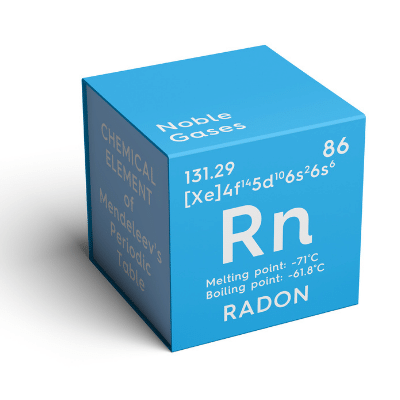
Radon is technically heavier than air, so people assume it sinks and stays in low areas. While that’s partly true, air movement inside your home plays a bigger role in how radon travels.
Here’s how radon spreads upward:
- Air pressure differences between the ground and your home can pull radon in.
- Warm air rises, creating suction that draws radon up from the basement, known as the stack effect.
- HVAC systems can circulate radon-laced air throughout the house.
So yes—radon can and does move from your basement to the upstairs areas, even if the upstairs rooms seem well-ventilated or far from the ground.
Can Radon Reach the Second Floor or Bedrooms?
Absolutely. Radon doesn’t stay neatly contained in the basement or crawl space. As air moves naturally through stairwells, vents, or ductwork, radon can move with it. We’ve seen homes where the highest radon levels were in main-floor bedrooms or second-story nurseries.
This is especially important if you or your family members spend a lot of time upstairs. Just because the basement isn’t often used doesn’t mean your health is out of harm’s way.
Do Homes Without Basements Still Have Radon?
Yes—even homes without basements can have radon problems. Slab-on-grade foundations, crawl spaces, and even new builds are not immune. Radon can come up through:
- Cracks in the slab
- Gaps around plumbing
- Openings in sump pits or floor joints
The misconception that “no basement = no radon” is a risky one. Radon comes from the soil, not the room itself.
Can Radon Get Into a New Home?
Yes, radon can still enter brand-new homes. And because our region has some of the highest radon levels in the country, it’s especially important not to ignore the risk just because your home is new. Your new home likely sits on the same kind of radon-heavy soil that older homes do.
There are a few reasons why radon can still enter a new home:
- Tight construction means more trapped air: New homes are built to be energy efficient, with better insulation and air sealing. While that’s great for your utility bill, it also means less air exchange — and more potential for radon gas to get trapped inside.
- Radon can pass through modern materials: Materials like concrete, drywall, and insulation are no match for radon. The gas molecules are so small, they can pass through most building materials, not just cracks or open areas.
- New homes still settle: Even brand-new foundations develop small cracks over time. It doesn’t take a big hole for radon to enter — hairline fractures can be enough to let the gas in.
- Basements and slabs create suction: Homes with basements or slab-on-grade construction often create a natural vacuum effect, pulling soil gases like radon up from the ground. That suction effect can exist no matter how new the home is.
- Radon-resistant doesn’t mean radon-free: Some new homes are built with radon-resistant features such as gravel and plastic sheeting under the slab, sealed sump pits, and passive venting systems. But without a fan-powered mitigation system, passive systems don’t always keep radon levels below the EPA action threshold.
Why Are Radon and Moisture Often Found Together?
Radon and moisture may seem like two completely separate issues, but in reality, they often appear together in homes—and for good reason. Moisture in basements, crawl spaces, or under slabs isn’t just a nuisance—it can make radon entry easier. Here’s how:
- Cracks and Gaps Widen: Water can erode concrete and soil, enlarging the cracks and gaps through which radon enters.
- Pressure Changes: Damp soil retains more heat and expands, which can create slight pressure differences between the soil and your basement. This draws radon upward into your home.
- Porous Surfaces: Moisture can seep into porous concrete or masonry, carrying radon gas along with it.
How Do I Know If I Have a Radon Problem?
There’s no way to know your home’s radon level without a test. You can’t smell it, see it, or feel its effects until long-term damage has already occurred.
And because radon levels can change due to weather, ventilation, or even time of year, you can’t rely on your neighbor’s test results or assume your home is “probably fine.” Every home is different—even ones on the same block.
How Do I Test For Radon, and What Should I Do If I Have High Levels?
There are two types of radon tests:
- Short-term tests (2–7 days): Good for a quick check.
- Long-term tests (90+ days): Better for understanding seasonal patterns.
If your results are 4.0 pCi/L or higher, the EPA recommends radon mitigation. In Iowa and Nebraska, where average levels are far above the national average, mitigation is often the safest move.
Do I Really Need a Radon Mitigation System?
If your home has a radon level higher than the recommended level of 4.0 pCi/L, then you’ll need a mitigation system.
Radon exposure is the second leading cause of lung cancer among smokers and the leading cause of lung cancer among non-smokers. EPA estimates show that radon exposure causes about 21,000 lung cancer deaths each year, with about 2,900 of those deaths being non-smokers.
Since you can’t see or smell radon, you and your family could be exposed for years without knowing that it is present in your home. This is why it is important to test for radon levels to know for sure if the air quality in your home is safe.
Jerry’s Waterproofing: Radon Mitigation You Can Trust
If you’re in Iowa or Nebraska and need radon mitigation, Jerry’s Waterproofing is fully licensed in both states. Our team installs discreet, effective radon systems that pull radon out from below your home and vent it safely outside.
We know radon, we know how it moves through your home, and we know how to keep your family safe.
Worried About Radon In Your Home?
Let us test your levels and recommend a solution. Contact Jerry’s Waterproofing today for radon mitigation services in Omaha, Council Bluffs, Lincoln, and beyond.