


When most homeowners think of basement water problems, they picture the obvious: puddles on the floor, soaked carpet, or a full-blown flood.
But in Eastern Nebraska and Western Iowa, basement water issues often start quietly — and the early warning signs can be easy to miss.
If you catch them early, you can avoid expensive damage, mold growth, ruined finishes, and long-term foundation problems.
Here are some less common signs your basement may already be dealing with water intrusion or moisture problems, even if everything looks fine at first glance.
1. That “Basement Smell” Isn’t Normal (Even If It’s Not Strong)
Musty doesn’t mean “old house.” It usually means moisture.
A damp, earthy smell is often the first sign of moisture — even before you see water. The odor is caused by mold spores and bacteria feeding on damp materials like wood framing, cardboard boxes, drywall paper, and insulation.
What it can mean:
- Humidity is too high
- Moisture is entering through foundation walls
- Water is getting under flooring or behind finished walls
Quick check:
If the smell is stronger near one corner or wall, it may point to the main entry point.
2. Your Dehumidifier Fills Up Fast (Or Runs Constantly)
A dehumidifier is not a fix — it’s a symptom monitor.
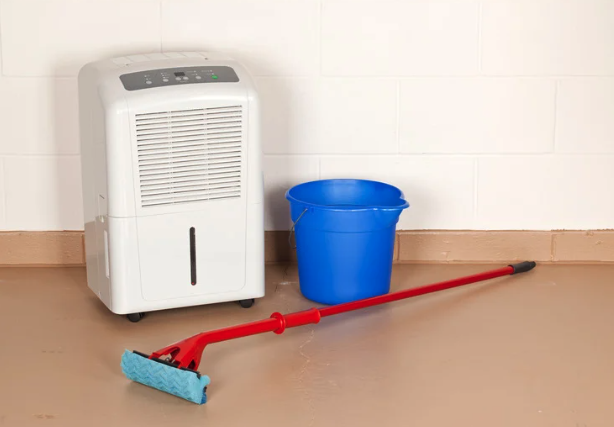
If you’re emptying your dehumidifier daily (or it never shuts off), your basement is telling you something: moisture is being introduced faster than your home can naturally remove it.
This is especially common:
- After heavy rain
- During spring thaw
- During humid stretches in summer
- When gutters/downspouts aren’t pushing water away from the home
What it can mean:
- Water is seeping through porous concrete
- Groundwater pressure is increasing
- There’s hidden condensation
3. The Bottom of Your Basement Walls Look “Wavy” or Slightly Discolored
Water damage doesn’t always look like dripping — it often looks like “age.”
Look closely at the bottom 6–12 inches of basement walls (finished or unfinished). Moisture often shows up as:
- faint yellowing
- discoloration
- rippling paint
- subtle warping
What it can mean:
- seepage through the wall
- moisture wicking upward from the floor joint (cove joint)
- water behind finished walls
4. White Chalky Streaks on Walls (Efflorescence)
That white powder isn’t dust — it’s proof water is moving through your foundation.
Efflorescence is a mineral deposit left behind when water travels through concrete or masonry and evaporates.
It’s one of the clearest “silent signs” of water intrusion because it shows:
- water entered the wall
- water moved through the wall
- water evaporated inside your basement
Even if your basement never “looks wet,” efflorescence says moisture is present.
5. Your Basement Feels Colder or More Humid Than It Used To
Temperature changes can be a moisture clue, not an HVAC issue.
Moisture affects temperature. A damp basement often feels:
- cooler
- clammy
- heavier in the air
This can happen even without standing water, especially in Nebraska/Iowa where seasonal temperature swings create condensation risk.
What it can mean:
- condensation is forming on walls, pipes, or ductwork
- insulation is damp
- crawl space or rim joist area is leaking air/moisture
6. Rusting Metal Down There (Even Without Leaks)
Rust can be a humidity alarm.
If you notice rust forming on:
- the bottom of your furnace/water heater
- metal shelving
- electrical panel edges
- nails in exposed framing
- ductwork seams
… it’s often a sign your basement humidity is high enough to cause corrosion.
That level of moisture can also support mold growth — even if your basement “looks dry.”
7. Your Sump Pump Works … But You Still Smell Mustiness
A working sump pump doesn’t guarantee a dry basement.
A sump pump handles water that reaches the sump pit — but it doesn’t stop:
- seepage through walls
- water entering at the cove joint
- moisture trapped behind finished walls
- hydrostatic pressure issues
If your sump runs but you still notice humidity, odors, or wall staining, it may mean your basement needs a more complete drainage solution.
8. “Ghost” Stains on the Floor Near Walls
Water doesn’t always puddle — sometimes it leaves a footprint.
You may notice:
- darker concrete near the perimeter
- stains along one wall
- a faint ring near the base of stairs or furnace area
These can be signs of:
- previous seepage that dried
- water wicking under flooring
- recurring moisture that evaporates quickly
9. Peeling Paint Isn’t Just Paint Failure
Paint doesn’t peel for no reason — moisture is usually behind it.
Basement paint bubbles, flakes, or peels when moisture pressure builds behind it. This is common on:
- block walls
- poured concrete
- older foundation coatings
Repainting without addressing moisture usually leads to the same problem again.
10. Your Basement Windows or Window Wells Look “Fine” … But the Corners Don’t
Basement windows leak from the edges first — not the middle.
Small leaks often show up as:
- damp corners
- dark trim
- soft drywall around the window frame
- water stains under the window (but only after storms)
Window wells can also trap water if:
- drains are clogged
- soil level is too high
- covers funnel water instead of shedding it
11. Mold Keeps Coming Back in the Same Spot
Recurring mold is rarely a cleaning issue — it’s a moisture source issue.
If you repeatedly clean mildew and it returns in the same area, that’s a strong sign there is:
- hidden seepage
- condensation behind walls
- a crack allowing moisture intrusion
This is common behind:
- finished basement walls
- storage shelving
- corners with poor airflow
12. Your Basement Door Sticks (Or the Latch Doesn’t Line Up)
Moisture can cause swelling — and foundation movement can cause shifting.
A sticking basement door can point to:
- humidity swelling the door/frame
- slight structural movement from soil pressure or water saturation
If you notice this alongside wall cracks or musty odors, it’s worth getting checked.
Why These Early Signs Matter
Basement water issues don’t just threaten storage boxes — they can affect:
- indoor air quality
- mold risk
- foundation stability
- property value
- long-term repair costs
And the earlier you catch the problem, the easier (and more affordable) it is to fix.
Need a Professional Opinion? We Offer Free Estimates.
Jerry’s Waterproofing, Inc. has served Eastern Nebraska and Western Iowa since 1976. If you’re noticing any of the signs above — even if you’ve never had a flood — our team can help you find the root cause and the right solution.
Call 866-794-1104 to schedule your free estimate.